
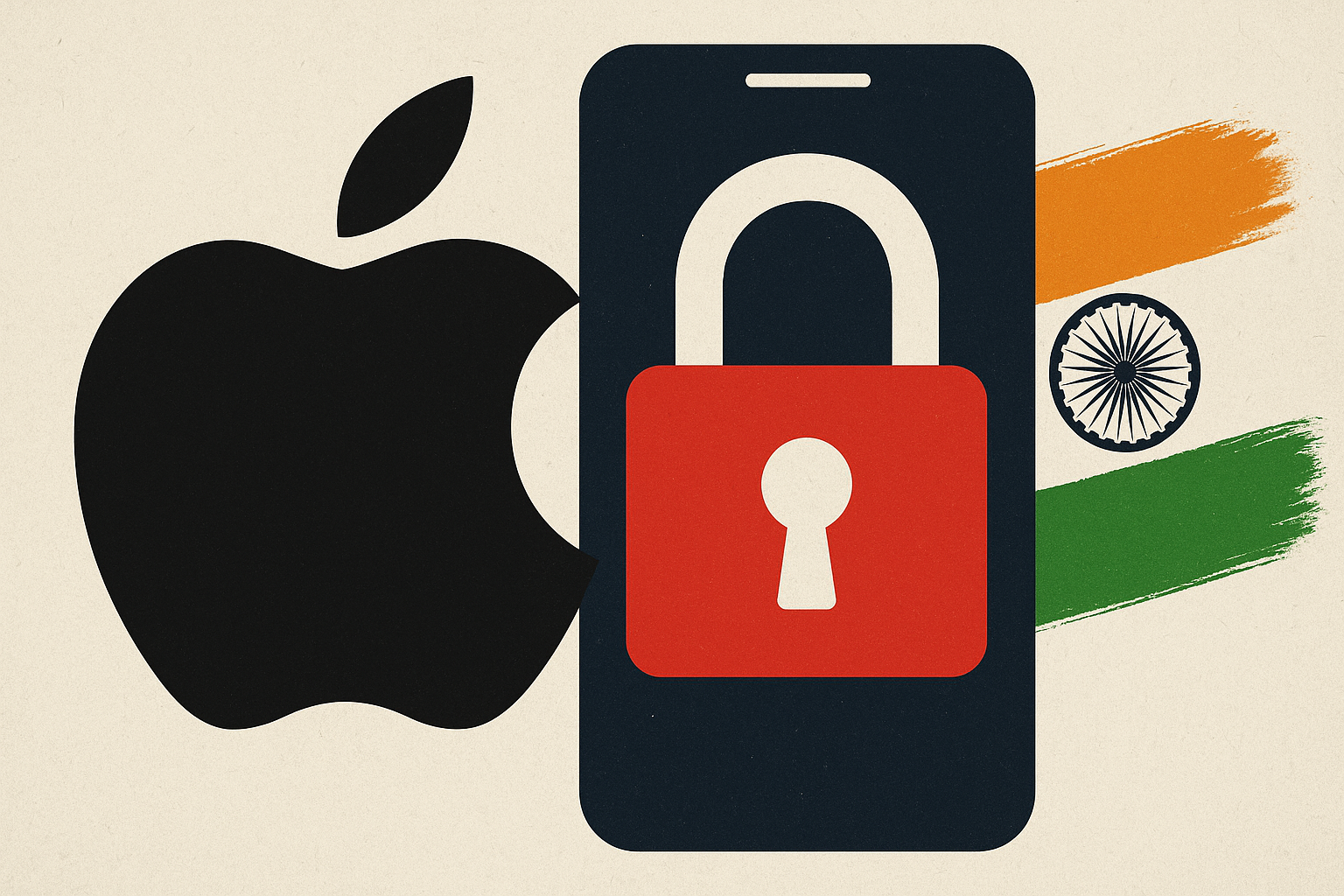
Apple is reportedly not planing to comply with India’s decision to require smartphone makers to preload a state-run cyber safety app on all new devices.
The move, confirmed this week, sets a 90-day window for Apple, Samsung, Xiaomi, and others to install the Sanchar Saathi app on every future smartphone sold in the country, while also pushing it to devices already in the supply chain through software updates.
As per a Reuters exclusive, the directive immediately escalated into a national debate as political parties, regulators, and global tech firms reacted to the scale of the requirement and its impact on privacy, user control, and ecosystem security.
Apple prepares to raise objections
Apple has internally concluded that it cannot comply with the directive.
According to Reuters, Apple plans to tell New Delhi that the requirement conflicts with its global policies on system-level app installation.
Apple’s platform rules do not allow government-mandated software to be preloaded into iOS or pushed onto existing devices through updates, as this could weaken its security model and introduce vulnerabilities.
This internal assessment comes at a time when Apple already faces added scrutiny in India, including a recent antitrust dispute in which regulators told a Delhi court that the company was trying to delay a penalty-linked investigation.
These concerns are central to Apple’s approach as it reviews the order.
The company’s ecosystem is built on strict control of its operating system and App Store, which underpin a services business worth around 100 billion dollars annually.
Apple is not expected to take legal action or make a public declaration, but it will formally communicate that the technical demands of the mandate are incompatible with the protections built into iOS.
Government order triggers pushback
The confidential instruction became the centre of attention after India’s telecom ministry publicly confirmed it.
The ministry positioned the mandate as a cybersecurity measure aimed at tackling the growing misuse of stolen phones and duplicated IMEI numbers.
Under the new policy, the app cannot be removed or disabled once installed, and manufacturers must ensure its uninterrupted functioning.
The order sparked intense political debate on Tuesday inside Parliament, where lawmakers questioned whether mandatory installation of a government-run app could open the door to large-scale digital monitoring.
The reaction quickly moved online, where opposition leaders posted concerns about the potential for device-level oversight across India’s vast base of more than 730 million smartphones.
The backlash has put the government under pressure to explain the scope and technical safeguards of the initiative.
Political tension builds around digital access
The political fallout expanded rapidly after the directive became public. Members of the opposition demanded that the order be withdrawn, framing the mandatory app as a potential tool for digital overreach.
Inside Parliament, discussions centred on the possibility of mass access to user data if the government maintains device-level control over the app.
The telecom ministry responded by highlighting the rise of cybercrime and the size of India’s second-hand mobile phone market.
Officials said stolen or blacklisted phones are routinely resold using spoofed identifiers, and the app is designed to block such activity across networks.
The ministry stressed that stopping device misuse is a priority, particularly as hacking and phone-based fraud increase.
Manufacturers assess immediate impact
Other smartphone makers are still reviewing the order.
Samsung and Xiaomi, which operate on Android, have more room to incorporate such requirements because the software is open-sourced and allows manufacturers to modify their systems.
Apple does not have that flexibility, making this directive more challenging for its ecosystem.
The development also arrives at a time when global app store rules are under scrutiny, including a separate challenge in India where Tinder-owner Match has disputed Apple’s App Store fees.
India’s mandate aligns with a wider global trend in which governments aim to curb cybercrime by blocking the use of compromised devices. Recent actions in Russia and other markets mirror these goals.
However, India’s approach stands out because it enforces the compulsory installation of a government-run app across one of the world’s largest smartphone user populations.
The scale of the rollout and the speed of implementation make this one of the most consequential digital policy developments of the year.
The post Apple privacy concerns rise as India orders mandatory installation of cyber safety app appeared first on Invezz
